



Ask AI Which Cleaning Method Is Right for Your Home
Get a quick summary of this Northern Connecticut soft washing vs. pressure washing guide.
What Is Soft Washing and How Does It Work?
The Process
Soft washing is a low-pressure cleaning method where the water pressure stays under 500 PSI, comparable to a strong garden hose. Instead of relying on force, it uses a chemical process to clean surfaces at the biological level.
A professional soft wash follows a controlled sequence:
- Pre-rinse all landscaping and protect sensitive areas like doorbells, cameras, and lighting fixtures
- Apply a diluted sodium hypochlorite solution to the surface
- A surfactant in the solution helps it cling long enough to penetrate and kill organic growth at the cellular level
- After the solution has time to work, a low-pressure rinse removes the dead growth and any remaining residue
Why Soft Washing Lasts Longer
The reason soft washing outlasts pressure washing comes down to what happens beneath the surface. Pressure washing removes the visible layer of algae or mold, but the root structure stays behind and regrows quickly. Soft washing kills the organism all the way down, which is why results on siding typically hold for two to three years before organic growth becomes visible again.
Why It’s Professional Work
Solution strength matters. Siding gets a lower concentration. Roofs get a stronger mix. Getting the ratio wrong means the job either doesn’t work or risks the surface. This is one of the reasons soft washing is professional work, not a weekend project with a rented machine.
What Is Pressure Washing and When Does It Make Sense?
How It Works
Pressure washing pushes water at 1,300 to 3,100 PSI to mechanically remove dirt, grime, oil stains, and embedded debris. No chemical solution is needed for most flatwork. The water force handles it.
Where Pressure Washing Belongs
Concrete driveways, sidewalks, patios, stone walkways, and pool decks are ideal candidates. These surfaces are hard, non-porous, and built to handle the impact. Years of tire marks, oil drips, and ground-in dirt build up in ways that low-pressure rinsing can’t reach.
Where It Causes Problems
The trouble starts when that same force hits surfaces that can’t take it:
- Vinyl siding cracks and warps
- Paint peels off wood and trim
- Wood splinters and develops lap marks
- Water gets forced behind panels and into wall cavities
- Roof shingles lose their protective granule layer
Each of those outcomes creates a repair bill that costs more than the cleaning saved. Pressure washing has a clear role in exterior cleaning. It just doesn’t belong on every surface.
Soft Washing vs. Pressure Washing: The Full Comparison
The table below breaks down how these two methods compare across the factors that matter most when you’re deciding what your home needs.
| Factor | Soft Washing | Pressure Washing |
|---|---|---|
| Water Pressure | Under 500 PSI | 1,300 to 3,100 PSI |
| Cleaning Agent | Sodium hypochlorite solution + surfactant | Water only (occasional detergent) |
| What Does the Cleaning | The chemical solution | The water force |
| Best For | Siding, roofs, painted surfaces, wood, stucco | Concrete driveways, sidewalks, patios, stone |
| Risk of Surface Damage | Very low when applied correctly | Higher on siding, roofs, wood, and painted surfaces |
| How Long Results Last | 2 to 3 years on siding; 1 to 3+ years on roofs | 6 to 12 months on most surfaces |
| Kills Growth at the Root? | Yes | No, removes surface layer only |
| Manufacturer-Endorsed for Roofs? | Yes, ARMA recommends this method | No, ARMA warns against it on shingles |
The two methods solve different problems. Soft washing is a chemical treatment. Pressure washing is a mechanical one. The right choice depends entirely on the surface and what’s stuck on it.
Which Method Does Each Part of Your Northern Connecticut Home Need?
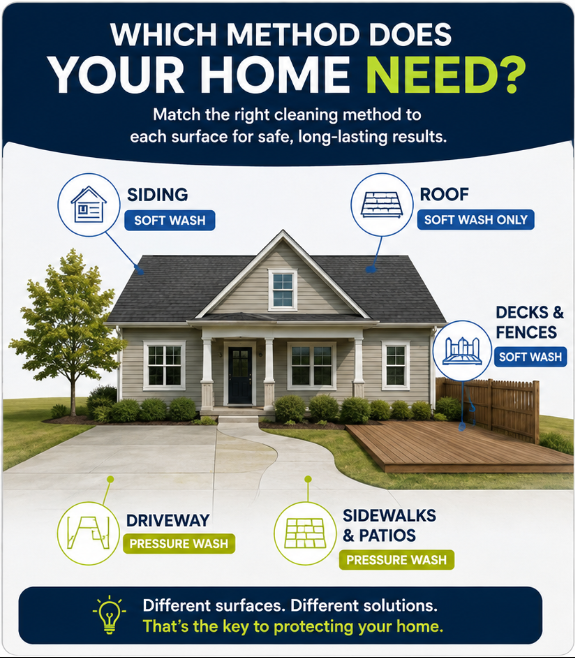
Siding: Soft Wash
Vinyl, Hardie board, foam-backed vinyl, stucco, and wood siding all get soft washed. High-pressure water on these materials forces moisture behind panels and can damage paint or void warranties.
Northern Connecticut homes with heavy tree canopy and north-facing walls develop algae and mildew faster than homes sitting in open sun. Towns like Somers, Tolland, Ellington, Bolton, and Coventry have a lot of properties tucked into wooded lots where siding stays shaded and damp for most of the day. Soft washing is the only safe method to address that growth without damaging the surface underneath.
Learn more about our house washing process.
Roof: Soft Wash Only
The Asphalt Roofing Manufacturers Association (ARMA) and major shingle manufacturers including GAF and CertainTeed endorse only low-pressure chemical treatment for asphalt shingle roofs. Pressure washing strips the protective granule layer from shingles and can give manufacturers grounds to deny warranty claims.
What causes those black streaks?
The black streaks spreading across a roof are caused by Gloeocapsa magma, a type of cyanobacteria commonly called blue-green algae. It feeds on the limestone filler in asphalt shingles. A soft wash solution kills this organism at the cellular level, so the streaks don’t return for one to three years or longer depending on shade and moisture exposure. Pressure washing only removes the visible discoloration while the root structure stays embedded in the shingle.
Insurance implications
Insurance companies in Connecticut are increasingly flagging roofs with visible algae and moss growth. Some require cleaning before they’ll renew a policy. Soft washing meets both the manufacturer standard and the insurance requirement.
How we handle roof cleaning
We use a touchless soft wash method that includes:
- A detailed drone inspection before any work begins
- Low-pressure chemical application that meets ARMA and manufacturer standards
- An honest assessment of your roof’s condition. If it’s too deteriorated, we’ll recommend a roofer instead of selling an unnecessary cleaning.
Learn more about our professional roof soft washing.
Concrete Driveways, Sidewalks, and Patios: Pressure Wash
Hard, non-porous concrete handles high pressure well. This is where mechanical force earns its place, cutting through oil stains, tire marks, and buildup that a chemical rinse alone won’t lift from flat surfaces.
One detail specific to Northern Connecticut: semi-rural towns like Somers, Tolland, and Willington rely heavily on private wells. Iron-rich well water leaves orange rust stains around sprinklers and on concrete. Hard water leaves white calcium deposits on concrete and glass. These stains need specific treatment beyond a standard pressure wash, so mention them when you’re getting a quote.
We handle driveway cleaning and concrete cleaning as part of our exterior services.
Decks and Fences: Soft Wash
Wood is porous. High pressure splinters the grain, leaves lap marks, and accelerates rot. Soft washing removes algae, mildew, and weathering safely without tearing up the wood surface. We offer deck cleaning and fence cleaning using low-pressure methods appropriate for the wood type.
Why Most Northern Connecticut Homes Need Both Methods
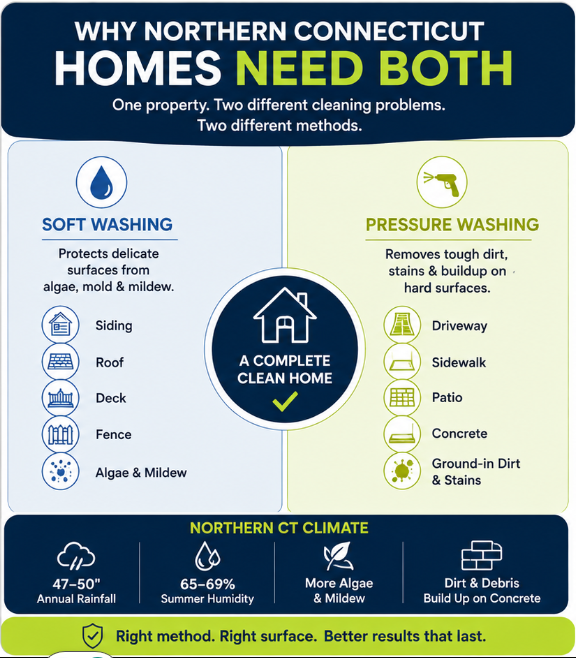
A typical property in Northern Connecticut has vinyl or Hardie siding, an asphalt shingle roof, a concrete driveway and walkways, and possibly a wood deck or fence. One cleaning method doesn’t cover all of that. Each surface needs the method matched to its material, and most homes have surfaces in both categories.
The right question isn’t “soft wash or pressure wash?” It’s “which method on which surface?”
How Northern CT’s Climate Drives the Need
Northern Connecticut’s climate makes this especially relevant. The state averages 47 to 50 inches of annual rainfall with summer humidity running 65 to 69 percent. That combination fuels organic growth on vertical surfaces while simultaneously driving dirt and debris into horizontal concrete. Both problems show up on the same property, and both need the correct method.
Late spring through early fall is the primary cleaning season in Northern CT. Spring is ideal for siding after pollen settles and winter algae becomes visible. Roofs can be cleaned anytime growth is present.
What to Ask Before Hiring
Before hiring anyone, ask what method they plan to use on each surface. If the answer is “pressure wash everything,” keep looking.
Cost: What You’re Actually Paying For
Soft washing costs more per service than pressure washing. The difference comes from specialized equipment, professional-grade cleaning solutions, and additional steps like landscaping protection and controlled chemical application.
But soft washing results last significantly longer. When you factor in how often each method needs to be repeated, the cost per year of clean is often comparable or lower for soft washing. A service that costs more upfront but holds for years beats a cheaper option that needs repeating every six to twelve months.
For Northern CT pricing specifics broken down by surface, property size, and the factors that affect your quote, read our detailed guide to power washing cost in Northern Connecticut.
Frequently Asked Questions
Can I rent a pressure washer and do this myself?
On a flat concrete driveway, a rented pressure washer is a reasonable DIY job for a handy homeowner. Soft washing siding or a roof is not. The solution handling, dilution ratios, equipment calibration, and landscaping protection require professional training and equipment. Getting it wrong means stripped paint, water behind your siding, dead plants, or granule loss on your roof.
Will pressure washing void my roof warranty?
It can. Pressure washing counts as improper maintenance under most asphalt shingle warranty terms because it strips the protective granule layer rather than treating the biological growth causing the problem. The manufacturer-recommended alternative is a low-pressure chemical application, which is what a professional soft wash provides.
Is soft washing safe for plants and pets?
The working concentration of sodium hypochlorite used in soft washing breaks down rapidly in soil and sunlight. Professional crews protect landscaping by saturating it with water before and after the service, and use breathable coverings on sensitive plantings when conditions call for it. Pets should stay indoors during the service and off treated surfaces until dry.
What if a company says they’ll “soft wash” but shows up with a high-pressure machine?
Ask about PSI before they start. Legitimate soft washing operates under 500 PSI. If the equipment is running at 1,500 PSI or higher on your siding or roof, that’s pressure washing regardless of what the company calls it. The label matters less than the actual pressure hitting your surfaces.
Ready to Find Out What Your Property Needs?
We walk every property before quoting and explain exactly what we recommend for each surface and why. No guesswork, no one-method-fits-all approach.
Call or text us at (413) 216-4588 to schedule a free on-site estimate. We typically visit within 48 hours and send a photo-based proposal showing our findings and recommendations. No pressure to say yes on the spot.


