

🤖 Summarize with AI
Most homes in Northern Connecticut need a full exterior wash once a year, typically in late spring after pollen season winds down. Driveways, walkways, and other flat surfaces often need a second cleaning in early fall before leaves pile up. Homes under heavy tree cover, or with north-facing walls that hold moisture, may need service every six to eight months to stay ahead of algae and mold.
If you search “how often should I pressure wash my house,” most results say once a year and leave it at that. That advice works fine for homes in dry climates with minimal tree cover. It does not account for what Northern Connecticut actually puts your exterior through.
We have been cleaning homes across Northern CT and Western MA since 2015, and the patterns repeat every season. Homeowners who wait until they can see green or black streaks from the driveway are usually a full season behind where they should be. This guide breaks down the cleaning frequency we recommend for homes in this region, surface by surface, based on what we actually see in the field.
Why Northern Connecticut Homes Need More Frequent Washing
Northern Connecticut sits in a humid continental climate zone that delivers close to 50 inches of rain per year. The national average is about 38 inches. On top of that, the state averages 37 inches of annual snowfall, and interior Northern CT towns often see more. All that moisture feeds the mold, mildew, and algae that make your siding, roof, and walkways look worse every year.
Rainfall is only part of the equation. The mature hardwood canopy across towns like Tolland, Vernon, Enfield, and Somers creates shade that keeps surfaces damp for days after a storm. North-facing and northeast-facing walls rarely get direct sun, so they stay wet long enough for organisms to establish and spread before you notice anything from the street.
Each tree species adds its own challenge. Oak trees hold their leaves well into January, which means gutters and flat surfaces collect debris months after other regions are done with leaf season. Maples produce heavy pollen every spring that settles on roofs and siding and gives algae exactly the nutrients it needs to take hold. Hemlock and pine drop needles and sap year-round, leaving sticky residue that traps dirt.
Then there is the freeze-thaw cycle. Moisture that seeps into concrete, pavers, and wood during the wet months expands and contracts through winter. By spring, surfaces that looked manageable in October have cracked joints, uneven sections, and a layer of biological growth that a garden hose cannot touch.
The standard “once a year” recommendation is a starting point for Northern CT. But it is a minimum, not a complete plan.
How Often to Wash Each Surface (Northern CT Schedule)
The table below is the frequency schedule we recommend for homes in this region. Your specific property may vary depending on tree cover, shade exposure, and how much direct sun your surfaces get. But as a general framework, this is what keeps most Northern CT homes ahead of the buildup cycle.
| Surface | Recommended Frequency | Best Time to Schedule | Why This Frequency in Northern CT |
| House Siding (Vinyl, Hardie, Stucco) | Once per year | Late May to early June | Clears winter grime and spring pollen before summer humidity accelerates algae growth |
| House Siding (North-Facing or Heavy Shade) | Every 8 to 12 months | Late May, with a spot check in October | Shaded walls stay damp longer and grow mold faster. A fall check catches what summer produced. |
| Roof (Asphalt Shingles) | Every 1 to 3 years depending on shade | Late spring or early fall | Algae builds slowly under canopy. A touchless roof soft wash kills growth at the root without damaging shingles. |
| Driveway and Walkways | Annually, some homes need twice | Late spring and early fall | Spring clears winter sand and salt. Fall prevents leaf staining and slip hazards before the freeze. |
| Deck (Wood or Composite) | Once per year | Late April to May | Clean before outdoor season starts. This gives time to reseal or restain before summer use. |
| Patio or Pool Deck | Once per year, twice if heavily shaded | Late spring | Removes winter algae buildup before barefoot season and prevents slippery surfaces. |
| Fence (Wood or Vinyl) | Every 1 to 2 years | Late spring | Shade and soil contact speed up growth. Cleaning before summer keeps it manageable. |
| Gutters (Exterior Face and Interior) | Twice per year | Late fall and late spring | Oak leaf drop runs into January. Two professional gutter cleanings per year keep flow and appearance right. |
| Solar Panels | Once per year | Spring | Pollen film reduces panel output. A spring cleaning restores efficiency before peak summer production. |
One pattern that stands out after years of working on Northern CT properties: horizontal surfaces need more attention than vertical ones. Driveways, patios, decks, and walkways hold water longer because it pools instead of running off. That standing moisture is where organisms take hold fastest. Vertical siding sheds rain quickly by comparison, which is why it can often go a full year between cleanings.
If you are curious about what these services typically cost, we put together a detailed breakdown of power washing costs in Northern Connecticut that covers pricing by surface type.
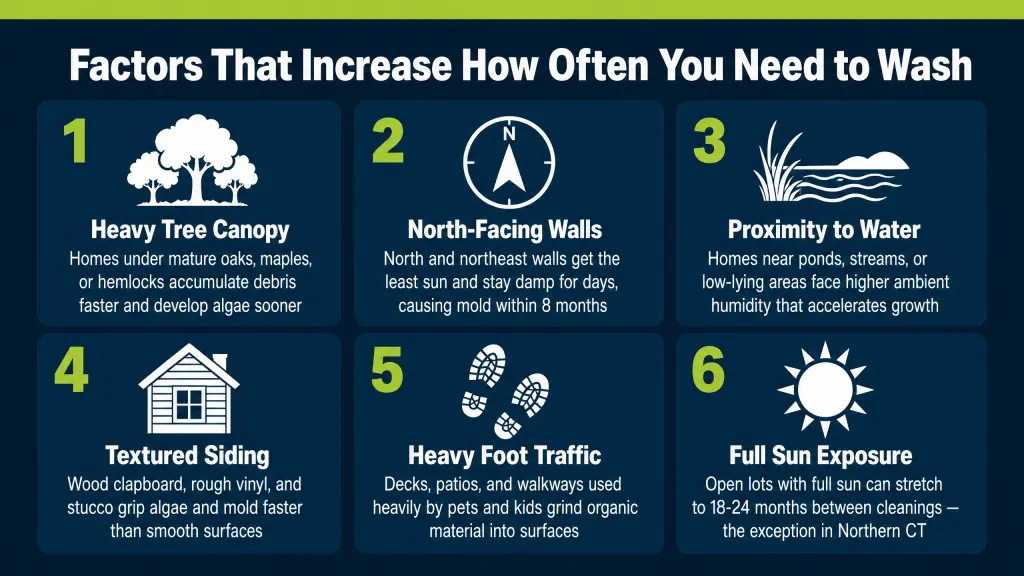
Factors That Increase How Often You Need to Wash
Not every home in Northern CT needs the same schedule. Some properties need cleaning more frequently than the baseline in the table above, and a few factors are responsible for most of the variation we see.
Heavy tree canopy is the single biggest factor. Homes surrounded by mature oaks, maples, or hemlocks accumulate organic debris faster, stay shaded and damp longer, and develop visible algae and mold sooner than homes on open lots. If your roof or siding is under canopy for most of the day, you are probably looking at the shorter end of every frequency range in the table.
North-facing and northeast-facing walls get the least direct sunlight. In Northern CT, where cloud cover and rain are already frequent, these walls can stay damp for days at a time. We routinely see north-facing siding develop noticeable growth within eight months of the last cleaning while the south-facing side of the same house still looks fine.
Proximity to water also matters. Homes near ponds, streams, or low-lying areas with poor drainage deal with higher ambient humidity. That extra moisture in the air accelerates growth on every exterior surface, from the siding down to the foundation.
Older homes with textured siding tend to collect dirt and organisms faster than smooth surfaces. Wood clapboard, rough-cut vinyl, and stucco all have surface texture that gives algae and mold more to grip. Smooth vinyl siding sheds growth more easily and can usually go longer between cleanings.
Properties with pets or kids who use decks, patios, and walkways heavily may want a second cleaning on those surfaces. Foot traffic grinds organic material into the surface and makes it harder to remove the longer it sits.
On the other hand, homes on open lots with full sun exposure and minimal tree cover can often stretch their schedule to the longer end of the ranges. A south-facing home with a clear yard and good drainage may only need a full exterior wash every 18 months to two years. These properties are the exception in Northern CT, though, not the rule.
What Happens When You Let Buildup Go Too Long
Algae, mold, and mildew do more than make your home look neglected. They trap moisture against the surface they are growing on, and that trapped moisture accelerates deterioration.
On siding, organic growth holds dampness against vinyl, wood, and composite materials. Over time, that constant moisture exposure causes paint to peel, wood to soften, and trim to warp. A yearly house washing keeps this cycle from gaining a foothold. On roofs, the dark streaking you see is usually caused by an algae called Gloeocapsa magma. This organism feeds on the limestone filler in asphalt shingles and gradually degrades the protective granule layer that keeps your roof functional.
Wood decks and fences take some of the worst damage. Biological growth breaks down sealants and stains, which exposes the raw wood underneath to rain and humidity. Once the protective layer is gone, splintering, graying, and rot follow. Replacing a deck or a stretch of fencing costs significantly more than an annual cleaning would have.
On concrete and pavers, algae creates a slippery film that turns walkways and patios into a safety hazard when wet. The EPA requires proper containment and wastewater management during pressure washing, which is one more reason professional service matters on these surfaces. After Northern CT’s freeze-thaw cycles shift and crack those surfaces through winter, a layer of slick organic growth on top makes them genuinely dangerous.
There is also a financial side. Real estate professionals consistently note that curb appeal improvements can add meaningful value to a home’s sale price. In Connecticut, where the median home price sits around $458,000 and the majority of homes sell above their asking price, a clean exterior is not just cosmetic. For homes in Northern CT towns like Tolland, Vernon, and Enfield, keeping up with exterior maintenance protects both the structure and the investment.
A Note on Cleaning Method: It Affects How Often You Need Service
The cleaning method your contractor uses directly affects how long results last, which changes how often you need to schedule.
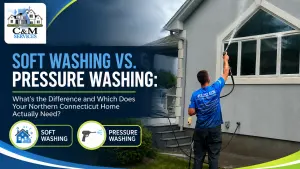
Traditional high-pressure washing blasts dirt and growth off the surface, but it does not kill the organisms. Algae and mold spores remain, and regrowth can begin within weeks. Soft washing uses low pressure combined with cleaning solutions that kill organisms at the root. Because the source of the growth is eliminated, results from a soft wash typically last significantly longer.
We use professional soft washing on most residential surfaces for this reason. Our machines run at 200 to 300 PSI on siding, roofs, and delicate materials, letting the solution and dwell time do the actual cleaning. The frequency recommendations in our schedule table above assume professional soft washing. If you are using a high-pressure-only approach, expect to clean more often to maintain the same results.
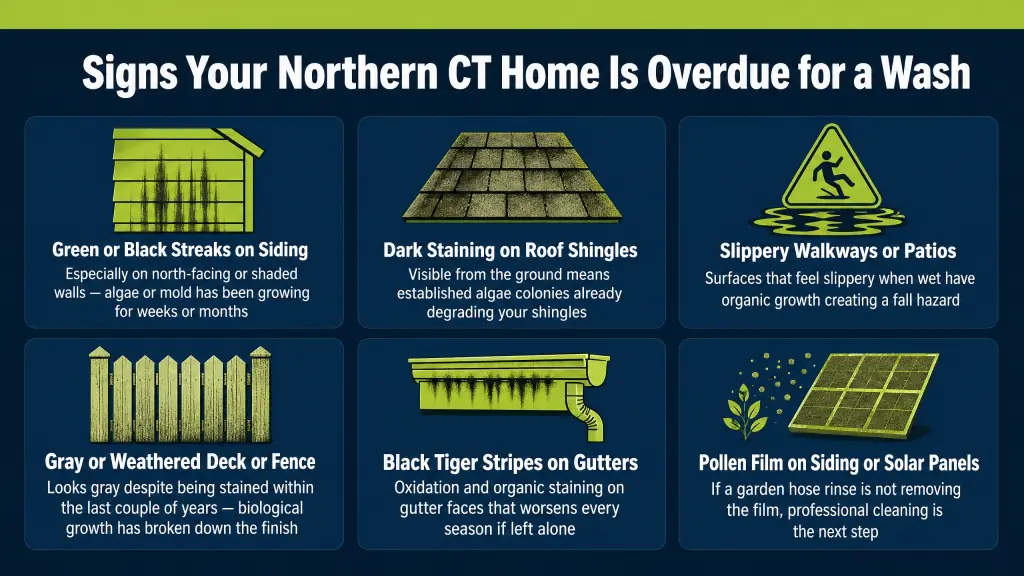
Signs Your Northern CT Home Is Overdue for a Wash
You do not always need to wait for the next scheduled cleaning. These are the signals that your home needs attention sooner:
Green or black streaks on your siding, especially on north-facing or shaded walls, mean algae or mold has been growing for weeks or months before it became visible. Dark staining on your roof shingles that you can see from the ground indicates established algae colonies that are already degrading your shingles.
Walkways, patios, or driveways that feel slippery when wet have a layer of organic growth that creates a fall hazard. This is especially common on shaded concrete and pavers in Northern CT after a wet summer. If your deck or fence looks gray and weathered despite being stained or sealed within the last couple of years, biological growth has likely broken down the protective finish.
Black “tiger stripes” running down gutter faces are oxidation and organic staining that worsens every season if left alone. And if a garden hose rinse is not removing the pollen film from your siding or solar panels, professional cleaning is the next step.
A simple rule: if it has been more than 12 months since your last professional exterior cleaning, your Northern CT home is likely overdue.
Frequently Asked Questions
How often should I pressure wash my driveway in Northern Connecticut?
Most Northern CT driveways hold up well with one cleaning per year in late spring. If your driveway sits under heavy tree cover or handles daily vehicle traffic from multiple cars, a second cleaning in early fall prevents leaf staining and keeps the surface safe heading into winter. Driveways that are sealed should be cleaned before reapplying sealant, typically every two to three years.
Do I need to wash my roof as often as my siding?
No. Roofs typically need cleaning less often than siding because shingles are designed to shed water. In Northern CT, a roof under heavy tree canopy may need a soft wash every one to two years, while a roof with good sun exposure can go two to three years. The key is catching algae early. Once black streaking is visible from the street, the growth has been there for months.
Does pressure washing really increase home value?
Clean exteriors consistently help homes sell faster and closer to asking price. In Connecticut’s current market, where the majority of homes sell above list price and median values exceed $450,000, a neglected exterior sends the wrong signal to buyers. The cost of an annual wash is a fraction of the value it protects.
How do I know if my home needs cleaning once a year or more often?
Walk your property and pay attention to the north-facing and most shaded walls. If those surfaces show green or black discoloration within eight to ten months of the last cleaning, you need a shorter cycle. Homes under heavy canopy with limited sun exposure are the most common candidates for twice-yearly attention on certain surfaces. Homes with open lots and full sun exposure can usually stick with annual service.
Will cleaning solutions hurt my landscaping?
We cover all plants and shrubs with breathable Tyvek material before applying any solution, and we dilute and rinse away standing water so only clean runoff remains. We use Tyvek specifically because it protects without trapping heat and moisture against the plant the way plastic sheeting and tarps do. After cleaning, everything gets a thorough rinse.
Get Ahead of Northern Connecticut’s Next Season
Northern CT does not give your exterior a break. Winter leaves salt and grime. Spring buries everything in pollen. Summer feeds algae and mold. Fall drops leaves that sit through January. The homeowners who stay ahead of this cycle spend less over time and avoid the expensive repairs that come from letting buildup go too long.
Not sure what your home needs right now? We visit every property in person before preparing a proposal, and most visits happen within 48 hours of your call. You will get a photo report showing exactly what we found, line-item pricing for each surface, and our honest recommendation on what needs attention now versus what can wait. Call or text us at (413) 216-4588 to schedule your free estimate.